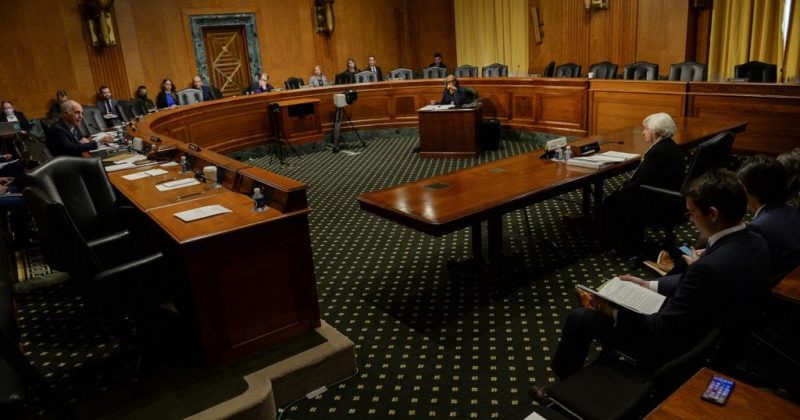
The US Senate just took its most significant step toward a comprehensive crypto regulatory framework. The Digital Asset Market Clarity Act, better known as the CLARITY Act, passed the Senate Banking Committee on May 14 with a bipartisan 15-9 vote, sending it to the full Senate for consideration.
Think of it as Washington finally deciding which cop patrols which neighborhood. The bill draws clear jurisdictional lines between the SEC and the CFTC, two agencies that have spent years in a turf war over who gets to regulate what in crypto. This bill aims to end the ambiguity.
What the bill actually does
The CLARITY Act runs 309 pages, up from a previous draft that clocked in at 278 pages. The expansion reflects months of negotiation and the addition of provisions designed to attract votes from outside the typical crypto-friendly coalition.
The SEC gets oversight of initial token offerings classified as digital asset securities. If a project raises money by selling tokens that look and act like investment contracts, the SEC is in charge.
The CFTC, meanwhile, picks up responsibility for spot trading of digital commodities, including tokens deemed “sufficiently decentralized.”
The bill also tackles stablecoins. Under the CLARITY Act, stablecoin issuers can offer transaction rewards to users but cannot provide bank deposit-like yield offerings.
The political math
A 15-9 committee vote in today’s polarized Senate counts as genuinely bipartisan.
The CLARITY Act incorporates something called the “Build Now Act,” a housing package bundled into the legislation to attract senators who might otherwise be indifferent to digital asset policy.
Senator Elizabeth Warren raised concerns about potential consumer protection gaps in the bill. Warren’s opposition signals that the floor debate will likely feature amendments aimed at tightening investor safeguards.
The chances of the CLARITY Act becoming law this year sit at roughly 70 percent, according to Grayscale’s assessment.
Why the SEC-CFTC split matters
The CLARITY Act creates a framework where both agencies have defined lanes. Initial offerings fall under the SEC. Once a token achieves sufficient decentralization, trading oversight shifts to the CFTC. It’s a lifecycle approach: the same asset can move from one regulatory bucket to another as its characteristics change.
What this means for investors
The stablecoin provisions deserve particular attention from yield-seeking investors. By prohibiting deposit-like offerings, the bill effectively channels stablecoin innovation toward payments and transactions rather than savings products. Any DeFi protocol or stablecoin issuer currently offering yield-bearing products will need to evaluate whether their model survives the new framework.
The bill still needs to pass the full Senate, survive a potential conference with the House, and reach the president’s desk. Warren’s consumer protection concerns could result in additional disclosure requirements or restrictions that shift the bill’s balance between innovation and regulation.
The EU’s MiCA framework is already live. The UK, Singapore, and Hong Kong have all moved forward with their own regulatory regimes. A 70 percent probability of passage this year is encouraging, but it also means there’s a meaningful chance the US fumbles the ball again.
