Key Takeaways
- Gold fell 23% from its January 2026 high of $5,608/oz to $4,331 on June 5, 2026.
- Kevin Warsh’s Fed and a 172,000 May payrolls beat pushed rate-hike odds higher, pressuring metals.
- Central banks added roughly 19 tonnes of gold in April, but Western outflows continued driving prices down.
How Far Prices Have Fallen
Gold peaked at $5,608 per ounce in late January 2026 before reversing sharply. By June 5, it had fallen approximately 23% from that record. Silver’s correction has been steeper, dropping roughly 44% from its high above $121 to around $67.30. Spot data on June 5 showed gold bid at $4,328 with a daily loss of 3.27%. Silver bid at $67.72, off 8.19% on the session.
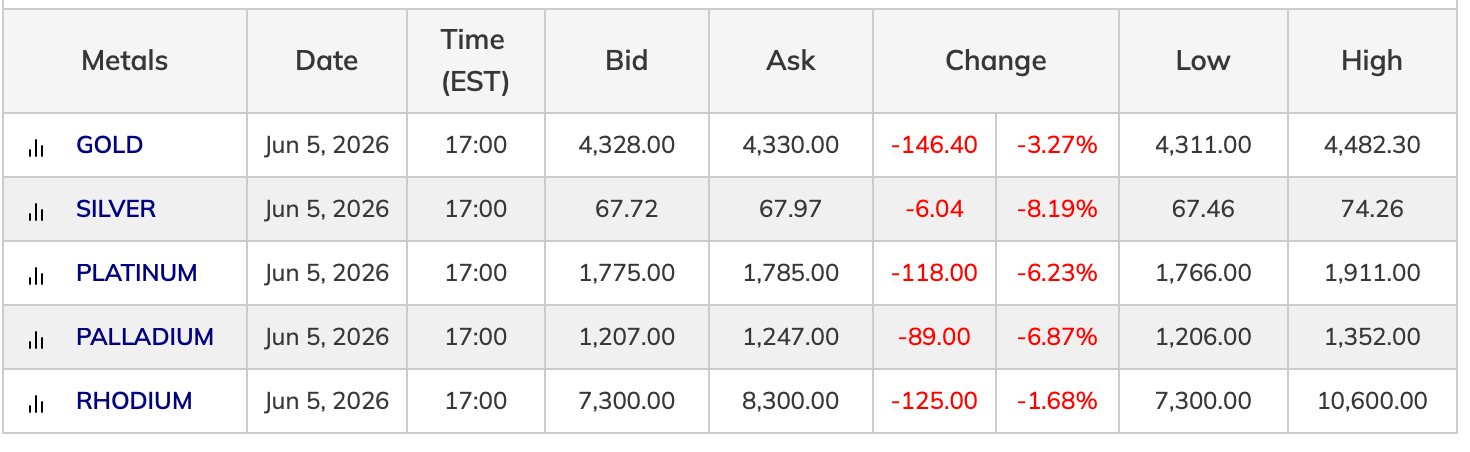
Platinum and palladium joined the rout. Platinum fell 6.23% to a $1,775 bid. Palladium dropped 6.87% to $1,207.
Why Classic Safe-Haven Logic Is Breaking Down
The U.S.-Iran conflict disrupted Strait of Hormuz shipping lanes, pushed oil above $100 per barrel at its peak, and helped lift US CPI to 3.8% year-over-year in April 2026. Under standard conditions, that combination would generate sustained buying pressure in gold.
Instead, traders moved the other way. The same inflation data that should boost gold has reinforced the case for a hawkish Federal Reserve. Higher expected rates raise the opportunity cost of holding a non-yielding asset. Real yields climbed. The US dollar held firm on rate differential support, making dollar-denominated gold more expensive for foreign buyers.
“The assets the entire world buys to protect against war and inflation just did the exact opposite of what they were supposed to do,” the X account Bull Theory wrote on Sunday morning. “ Gold hit an all-time high of $5,600 on January 29, up 31% in just 29 days, adding $9 trillion to its market cap. Silver hit $121 the same month, up 68% in 29 days, adding $3.5 trillion to its market cap. Every safe haven buyer was positioned perfectly.”
Bull Theory added:
“Then the U.S.-Iran war escalated in February, the Strait of Hormuz closed, oil hit $93, and inflation climbed to 3.8%. These are exactly the conditions gold and silver are supposed to thrive in. Instead, gold has now crashed 23% from its peak, wiping out $8 trillion in market value. Silver crashed 44%, wiping out $3.5 trillion. Both are now negative for 2026.”
Warsh Fed and the May Jobs Report
Kevin Warsh was sworn in as Fed Chair on May 22. His arrival followed a May jobs report showing 172,000 nonfarm payrolls against an 85,000 consensus estimate. That number, combined with upward revisions, shifted federal funds futures toward a higher terminal rate and raised the probability of a December rate hike.
The result: metals traders who entered 2026 positioned for rate cuts have spent five months unwinding those bets.
Central Banks Buy, Western Investors Sell
The structural bull case for gold remains intact in the background. Central banks, led by Poland, China, and Uzbekistan, continued net purchases through Q1 2026. China resumed buying in April, adding approximately 19 tonnes. Physical silver markets remain tight due to solar panel and electronics demand.
That structural demand has not been enough to offset Western investor outflows and speculative deleveraging. The January rally attracted heavy positioning. When the rate-cut narrative faded, leverage unwinds and technical breaks followed.
What Traders Are Watching Next
The Federal Open Market Committee (FOMC) meets June 16 and 17 in Warsh’s first meeting as Chair. A hold is widely expected. The dot plot, Summary of Economic Projections, and Warsh’s press conference tone will be the key variables to watch closely. A hawkish signal extends the correction. Any de-escalation on the Iran front or softer jobs data could produce a relief move in the opposite direction.
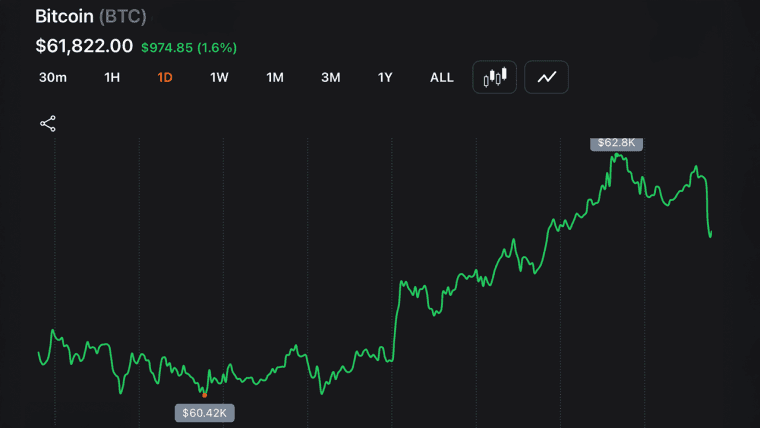
JPMorgan and others have maintained longer-term price targets in the $5,000 to $6,000 range. Near-term forecasts have been revised lower given the rate environment. Similar to bitcoin advocates, metal-focused proponents have long noted that the core drivers from 2025, including policy uncertainty, dollar trajectory, geopolitics, and equity valuations, remain structurally in place despite the pullback.