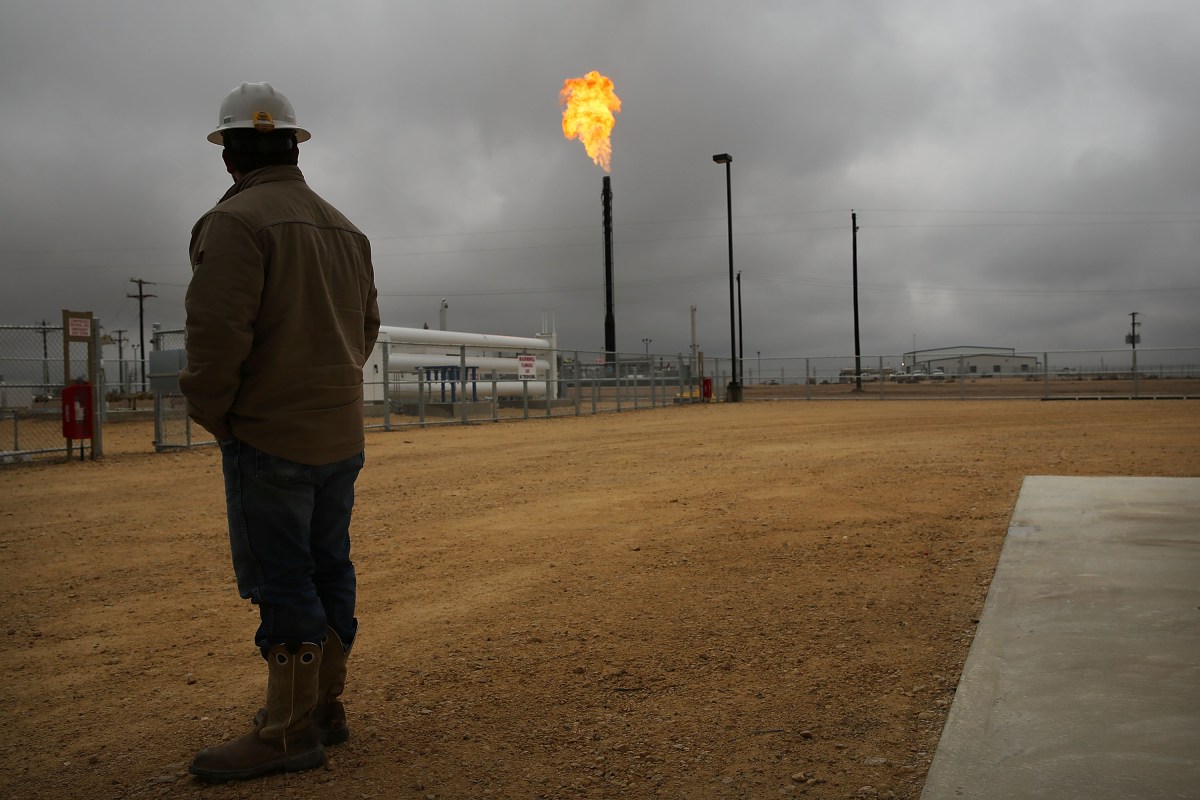
After years of snapping up wind and solar developments, hyperscalers like Amazon, Google, Meta, and Microsoft are betting that natural gas will power the data centers behind their lofty AI ambitions. But a new research report suggests they may regret their newfound affinity for the fossil fuel.
Natural gas prices could triple in some parts of the U.S. in the coming years as hyperscaler demand collides with declining supply growth and rising exports of liquefied natural gas, according to Noreva, an energy research firm. Hyperscalers might not be prepared for future price shocks.
“I think everyone in the energy markets has been lulled into a sense that gas prices can’t go up,” Peter Gardett, CEO of Noreva, told TechCrunch. “You just need simple arithmetic to get to a much tighter gas market than you were in just a few years ago.”
Hyperscalers’ big bets
Cheap gas has pushed hyperscalers to lock up part of the market. In March, Meta said it would build a massive 7.5-gigawatt natural gas power plant in Louisiana to power its Hyperion data center. A few days later, Microsoft and Google each said they’d build their own gigawatt-scale gas power plants, both in Texas. And not to be left out, Amazon plans to build a 7.6-gigawatt gas power plant in Texas.
For companies that historically have shied away from large capital expenditures, the data center building boom suddenly has them investing heavily in the physical world while also pushing them deeper into energy markets, which are even less familiar territory.
Gardett said at least one investor he spoke with was “surprised” by how much natural gas price risk hyperscalers are willing to take on. “They’re doing things that are not normal for an off-taker to do,” he said.
Noreva expects natural gas prices to soar above $10 per million BTUs in certain hubs, or delivery points for futures contracts. Today, prices range from about $2 to $4.50 per million BTUs, with the widely traded Henry Hub in Louisiana priced at just under $3.
Fuel represents about half the cost of electricity from a large power plant, so a doubling or tripling of natural gas prices could make “bring your own power” AI data centers much more expensive to run. That could drive up token costs, or it could push hyperscalers to connect to the grid, driving electricity prices higher.
For the foreseeable future, natural gas prices appear stable — futures contracts aren’t anticipating big changes. “It’s not an unreasonable bet,” Gardett said. But he’s not convinced they’re right.
Surging demand
Natural gas prices have been stable thanks to years of relatively flat demand and the steady addition of new supplies, which has countered waning production at old wells, Gardett said. He expects that energy companies will be able to add more supplies, just not at the rate they did before. Plus, new wells are getting more expensive.
“That alone wouldn’t change the economics here. What’s changing the number is that finally we’re connecting the domestic gas market to the global gas market,” he said. “And the second is the AI demand pull.”
Hyperscalers have been lured to Texas and Louisiana by cheap natural gas prices. In West Texas, in particular, most wells have been focused on oil, and the natural gas that comes out is a byproduct that hasn’t found much of a market. There weren’t a lot of big pipelines to move it out of the region, so producers sold natural gas at a discount to anyone who could use it. That’s changing, though.
“They’ve finally built some pipelines out there, and a lot of that is headed towards export markets,” Gardett said.
As West Texas becomes more connected to national and international natural gas markets, demand there will influence prices elsewhere and vice versa. Even modest price swings near hyperscalers’ big data centers could be magnified elsewhere.
“You will get places where you get a lot of gas next to someplace where there’s none, and so you’ll get those big differentials,” Gardett said. It’s those differentials that will drive prices in some regions above $10 per million BTUs for extended periods of time.
Under that scenario, even if hyperscalers can stomach higher prices, their natural gas consumption could add a new dimension to the data center backlash. Already, 80% of consumers are worried about data centers’ impact on their utility bills, mostly related to electricity. That angst could spill over to natural gas bills.
Hyperscalers, in their haste to power their AI data centers, are quickly enmeshing themselves in the fossil fuel world. It’s a space in which they have relatively little experience, but one that could soon materially impact their businesses.
“On future Alphabet earning calls, you will hear them talk about the correlation between natural gas pricing and Google results, which is strange, but that’s where we are,” Gardett said.
When you purchase through links in our articles, we may earn a small commission. This doesn’t affect our editorial independence.
