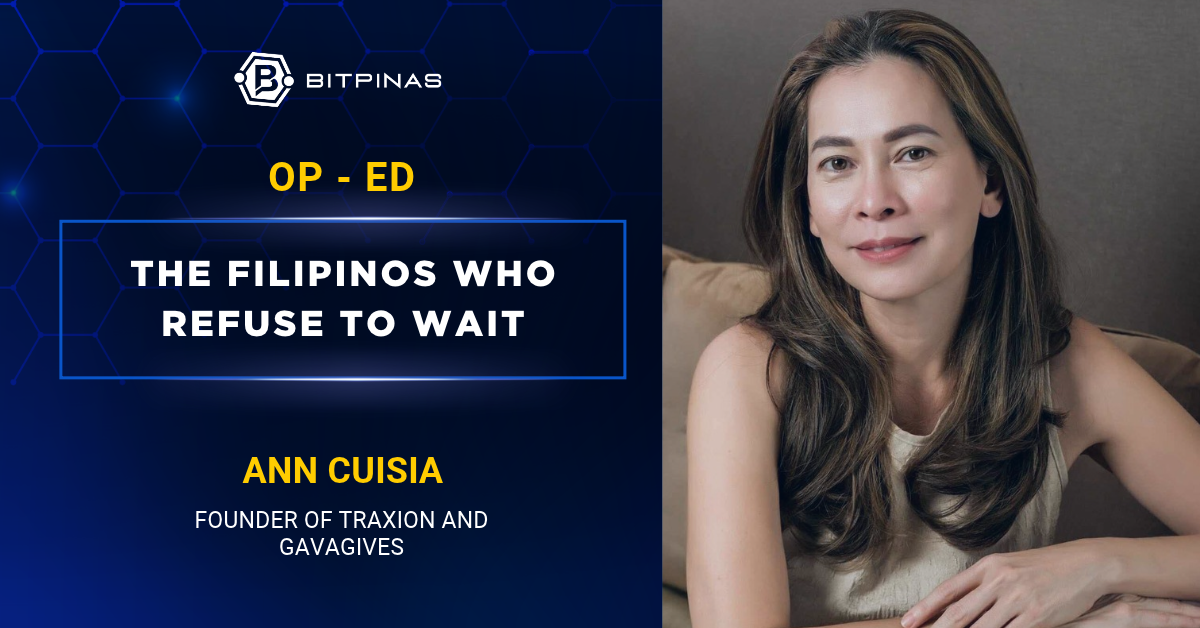
Technologist and blockchain entrepreneur Cuisia highlights how citizen-led tech makes public expenditure open and searchable for ordinary taxpayers, parents, and community members.
By Ann Cuisia, Octoner 19. 2026 (originally published on the author’s website)
A Filipino should not need a personal connection in government to find out what happened to public money. Nor should it take hours of searching through scanned documents to discover how much was allocated for a road that remains unfinished.
We paid for that road. We should be able to follow the money.
That is why BetterGov.PH’s first year deserves attention. The community reports more than 5,000 members, over 500 contributors, and more than 50 projects. Its volunteers have built tools that make budgets, flood-control contracts, laws, and public services easier to search and understand. These are practical contributions to a country exhausted by explanations that lead nowhere.
As a technologist and entrepreneur, I know what it takes to turn frustration into a working system. Someone has to clean the data, write the code, test the results, fix the errors, and keep showing up after the excitement fades. Much of that work is invisible. It deserves recognition.
There is something deeply patriotic about Filipinos giving their skills and time so that strangers can better understand their own government.
BetterGov’s budget portal, for example, makes more than 532,000 items in the proposed 2027 national budget available for scrutiny and comparison with the 2026 General Appropriations Act. That gives journalists, researchers, businesses, and ordinary taxpayers a more useful starting point for asking questions.
A parent should be able to understand what is being funded for education. A community should be able to identify the contractor responsible for its flood-control project. Information becomes valuable when people can use it.
The announced collaboration between DICT’s eGov team and BetterGov.PH on the national government portal is another encouraging development. Government is making room for Filipino contributors to help improve the digital services the public uses. That willingness deserves support—and sustained follow-through.
For that partnership to matter, contributors need clear responsibilities, a transparent review process, and people inside government who can act on their work. A useful contribution should have a path to implementation. Otherwise, enthusiasm eventually gives way to exhaustion.
Citizens must also remain free to question the institutions they help. Collaboration should strengthen independent scrutiny. A developer who volunteers to improve a government platform retains every right to criticize a failed project or an unexplained expenditure.
This is also why I continue to advocate for the CADENA Act. Its proposed digital budget portal would require disclosure across the budget process, making public financial records more accessible and traceable. Citizen-built tools need a dependable supply of timely, usable government data.
Volunteer effort deserves that institutional foundation. Transparency should survive changes in leadership, budgets, and political alliances.
And as someone who builds with blockchain, I am clear about its limits: a tamper-evident record can still contain a false claim. We need accountable signatories, supporting evidence, physical verification, and investigators who act when records reveal discrepancies. The system must help establish who submitted what, when, and on whose authority.
The real test comes when someone finds something wrong. Does an agency answer? Is the discrepancy investigated? Is a defective project corrected? Does anyone face consequences?
Those outcomes will determine whether digital transparency earns public trust.
BetterGov.PH gives us reason to be hopeful. Filipinos are contributing the talent, patience, and initiative needed to make public information useful.
Government should meet that effort with open records, clear obligations, and the courage to answer difficult questions.
The people are already helping build. Those entrusted with public power must do their share.
This article is submitted by Ann Cuisia to BitPinas: [Op-Ed] Ann Cuisia: The Filipinos Who Refuse to Wait
What else is happening in Crypto Philippines and beyond?
