
If you rely on apps like Discord to run your freelance business, collaborate with software teams, or study online, your digital workspace was abruptly cut off without a court order during a nationwide government blackout in late September. Now, a coalition of Philippine technology leaders, startup founders, and legal experts is taking top government officials to court to make sure an arbitrary administrative shutdown never happens again.
In a Petition for Certiorari and Prohibition filed directly with the Supreme Court on October 1, 2026, five tech advocates, backed by the volunteer civic technology movement BetterGov.PH, sued DICT Secretary Henry Rhoel Aguda, CICC Executive Director Renato Paraiso, and NTC Commissioner Ella Blanca Lopez. The lawsuit asks the High Court to strike down recent platform blocking orders as illegal and permanently bar executive agencies from shutting down online platforms without judicial process.
From 24-Hour Ultimatums to Nationwide Outages
The Petitioners:
-

Eliezer “Eli” Rabadon, technologist, businessman, and columnist -

Eddie Francis Cesar Plaza, startup founder, Y Combinator alumnus, and law student -

Christopher Star De La Torre, co-convenor of BetterGov.PH. -
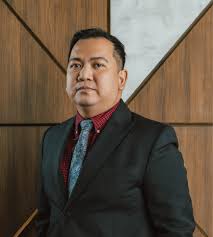
Atty. Arjel P. de Guzman, technology and IP lawyer and lead counsel -

Carlo Ople, entrepreneur, content creator, and founder of Creators Against Corruption
The legal battle stems from a rapid sequence of events in late September 2026. On September 21, the Cybercrime Investigation and Coordinating Center (CICC) sent letters demanding that global platforms Discord and Reddit appoint local resident agents in the Philippines within an ultimatum of just 24 hours. (Read More: CICC Gives Reddit, Discord 24 Hours to Set Up Philippine Offices or Face Potential Bans)
According to documents read by BitPinas, when immediate compliance was not met, the DICT and CICC asked the National Telecommunications Commission (NTC) on September 22 to issue a 15-day “precautionary suspension” against Discord. The following day, the NTC instructed all major internet service providers (ISPs) to block access nationwide. By the evening of September 23, users across Globe, GOMO, and PLDT were cut off from the service, encountering government blocking landing pages.
Although the government lifted the blockade on September 24 after an emergency meeting with Discord executives, CICC officials later admitted on public radio that they had failed to realize Discord is widely used as an essential workplace and educational tool, rather than just a casual gaming chat app.
Stopping the “Wash-Rinse-Repeat” Censorship Cycle
While Discord access was restored within hours, the petitioners argue that the lawsuit remains urgent because executive officials continue to assert that they hold the authority to block digital platforms at will. CICC leadership previously issued similar threats against platforms like Roblox and has repeatedly declared that excluding global digital services remains an active regulatory option.
The petitioners describe this tactic as an evasive “wash-rinse-repeat” cycle, which is where agencies impose sudden blockades and quickly withdraw them before lower courts can intervene, leaving fundamental digital liberties permanently threatened.
The five petitioners bringing the suit are:
- Atty. Arjel P. de Guzman, technology and IP lawyer and lead counsel.
- Christopher Star De La Torre, co-convenor of BetterGov.PH.
- Eddie Francis Cesar Plaza, startup founder, Y Combinator alumnus, and law student.
- Eliezer “Eli” Rabadon, technologist, businessman, and columnist.
- Carlo Ople, entrepreneur, content creator, and founder of Creators Against Corruption.
“The State’s noble crusade against cybercrime cannot be used as a blunt instrument to demolish the digital public square,” the petition reads. “By threatening a wholesale, nationwide blockage of global communication platforms premised on a twenty-four hour ultimatum of an administrative whim, the Respondents have crossed the line from protection into unconstitutional prior restraint, severing millions of Filipinos from their modern avenues of expression and livelihood without a shred of judicial due process.”
Bringing the Case to the Supreme Court
The petitioners argue that administrative agencies acted ultra vires (beyond their lawful authority) because neither the NTC’s legal charter nor the Cybercrime Prevention Act (RA 10175) gives executive officials the power to block entire platforms. The petition emphasizes that the Supreme Court already struck down warrantless administrative blocking of computer data in its landmark ruling Disini v. Secretary of Justice.
Moreover, the suit argues that platform-wide blocks fail strict constitutional scrutiny. Rather than using targeted, judicially supervised tools, such as specific URL takedowns, individual account suspensions, or preservation orders, the government chose a sweeping blanket ban that punished millions of law-abiding workers, students, and creators. (Read More: How the Discord Ban Hits Real Filipino Online Workers: Local Freelancers, Web3 Pros Share Their Stories)
By bringing the case to the Supreme Court, the petitioners aim to establish clear, binding constitutional rules that protect the country’s digital public square from arbitrary administrative shutdowns.
This article is published on BitPinas: Tech Leaders Sue DICT, CICC, and NTC Officials Over Discord Internet Blocking
What else is happening in Crypto Philippines and beyond:
